Support free journalism and freedom by “buying us a coffee” here. We are volunteers, not a for profit company and any donation big or small helps keep us going. All prizes we advertise are donated/organised by third parties.
YOU ARE ALREADY GREAT – BUT HERE’S MORE IDEA’S TO BE A SUPER PARENT!


SPOTTING AND TREATING DEPRESSION IN KIDS
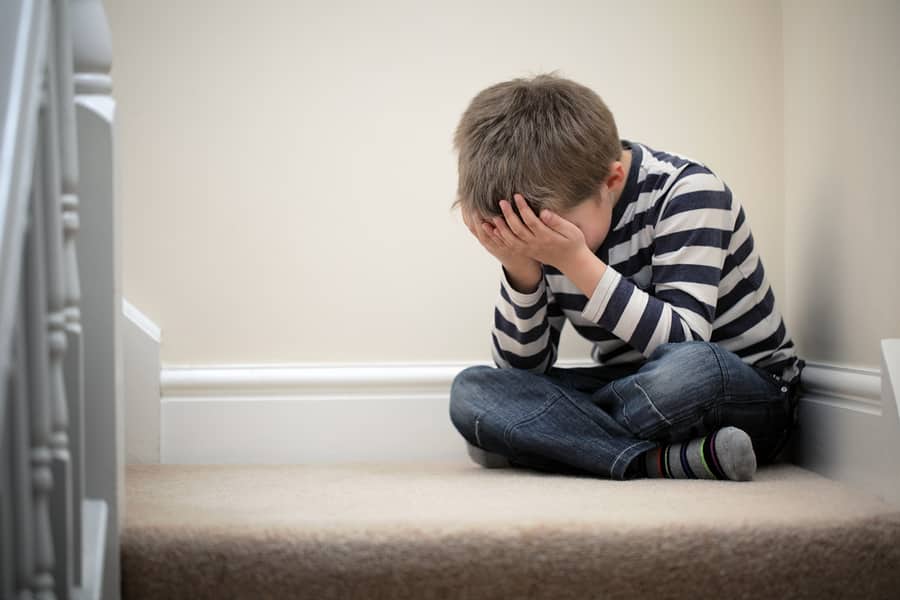
DEPRESSION IN KIDS.
From the charity relate.
Bad moods or occasionally feeling sad are normal in young people. When a depressive state or mood lingers for a long time and limits a person’s ability to function normally it can be diagnosed as depression. How can you tell the difference?
Teenagers with depression have described themselves as feeling hopeless about everything, that nothing is worth the effort and that they’re powerless to change the difficult place they’re in. Depression can be frightening for your teenager, you, and your entire family and if you think your teenager has symptoms of depression, it’s important to act so that they can get the help that they need.
Here are some of the common symptoms of depression:
- a feeling of being down in the dumps or really sad for no reason
- a lack of energy, feeling unable to do the simplest task
- an inability to enjoy the things that used to bring pleasure
- a lack of desire to be with friends or family members
- a lack of general motivation
- feelings of irritability, anger, or anxiety
- an inability to concentrate a marked weight gain or loss and too little or too much interest in eating.
- a significant change in sleep habits, such as trouble falling asleep or getting up
- feelings of guilt or worthlessness
- aches and pains even though nothing is physically wrong
- a lack of caring about what happens in the future
- frequent thoughts about death or suicide
Treating depression:
Talking therapy.
There are many different forms of talking therapy, which generally involve talking about their thoughts, feelings and life experiences with a trained professional, either on their own or as part of a group.
This process can help them to spot unhelpful thoughts and behaviours and think about what they can do to change these patterns.
Have a look at our counselling and therapy page to find out more about the different types of talking therapy, how they can help, and what happens in a therapy session.
Some people find that practising mindfulness or meditation can help make them feel calmer and more grounded.
If you’re not sure where to start, there are apps you can try, like Calm and Headspace.
Counselling and therapy
Counselling and therapy (sometimes called ‘psychotherapy’) are both types of talking therapy, which can be a source of support if someone is struggling with something.
As the name suggests, ‘talking therapy’ often involves talking about feelings, thoughts, and experiences.
This can help the person to make sense of what’s going on in their life, and give them a safe place where they can talk about difficult feelings, get things off their chest, and find ways of coping when things are difficult.
Counselling or therapy may be offered as a treatment for a specific mental health problem, but a person don’t need to have a diagnosed mental health condition, or even a specific ‘problem’, to do talking therapy.
We are a community based, non-profit organisation who is neutral and independent. Please consider supporting or work by “buying us a coffee” (donate) at buymeacoffee.com/keephopealive link. Alternatively, you can purchase an item from one of our affiliate links. Any help big or small will do. Thank you.
If you have an article you’d like to submit or volunteer and write some articles, please feel free to email us. We are a non-profit organisation.
THE GREAT HOMEWORK DEBATE – TO MUCH OR TOO LITTLE?
The homework debate is never much out of the news. Should homework be banned? Is homework at primary school a waste of time? Do our children get too much homework?
Not long ago, UK-based US comedian Rob Delaney set the world alight with a tweet giving his own personal view of homework at primary school.
How much homework do UK primary school children get?
Sadly, there’s little data comparing how much homework primary school-aged children in the UK and across the globe complete on a weekly basis.
A study of teenagers used by The Telegraph shows that American high-schoolers spend an average of 6.1 hours per week compared with 4.9 hours per week of homework each week for UK-based teens.
Up until 2012, the Department of Education recommended an hour of homework a week for primary school Key Stage 1 children (aged 4 to 7) and half an hour a day for primary school Key Stage 2 children (aged 7-11).
Many primary schools still use this as a guideline.
Teachers, parents, and children in many schools across the land have seen more changes of homework policy than numbers of terms in some school years.
A ‘no-homework’ policy pleases only a few; a grid of creative tasks crowd-sourced from the three teachers bothered to give their input infuriates many (parents, teachers, and children alike).
For some parents, no matter how much homework is set, it’s never enough; for others, even asking them to fill in their child’s reading record once a week can be a struggle due to a busy working life.
Homework is very different around the world.
We’d suggest that Piers Morgan’s argument for homework in comparing the UK’s economic and social progress with China’s in recent years based on total weekly homework hours is somewhat misguided – we can’t put their emergence as the world’s (if not already, soon to be) leading superpower exclusively down to having their young people endure almost triple the number of hours spent completing homework as their Western counterparts.
Nonetheless, there’s certainly a finer balance to strike between the 14 hours a week suffered by Shanghainese school-attendees and none whatsoever.
Certainly, parents in the UK spend less time each week helping their children than parents in emerging economies such as India, Vietnam, and Colombia (Source: Varkey Foundation Report).
Disadvantages of homework at primary school:
Delaney, whose son attends a London state primary school, has made it plain that he thinks his kids get given too much homework and he’d rather have them following more active or creative pursuits: drawing or playing football.
A father of four sons and a retired professional footballer Gary Linaker was quick to defend this but he also has the resources to send his children to top boarding schools which generally provide very structured homework or ‘prep’ routines.
As parents Rob and Gary are not alone. According to the 2018 Ofsted annual report on Parents Views more than a third of parents do not think homework in primary school is helpful to their children.
They cite the battles and arguments it causes not to mention the specific challenges it presents to families with SEND children many of whom report serious damage to health and self-esteem as a result of too much or inappropriate homework.
It’s a truism among teachers that some types of homework tell you very little about what the child can achieve and much more about a parent’s own approach to the work.
How low does your heart sink when your child comes back with a D & T project to create Stonehenge and you realise it’s either an all-nighter with glue, cardboard and crayons for you, or an uncompleted homework project for your child!
SCHOOL UNIFORMS – PROS AND CONS!

The first recorded use of standardized dress in education may have been in England in 1222, when the Archbishop of Canterbury mandated that students wear a robe-like outfit called the “cappa clausa.”
The origin of the modern school uniform can be traced to 16th Century England, when the impoverished “charity children” attending the Christ’s Hospital boarding school wore blue cloaks reminiscent of the cassocks worn by clergy, along with yellow stockings.
As of Sep. 2014, students at Christ’s Hospital were still wearing the same uniform, and according to the school it is the oldest school uniform still in use. When Christ’s Hospital surveyed its students in 2011.
However, a recent post by a teacher going by the name of Matthew Murray has thrown his hat into the arena.
The role of school uniform is under question. Concerns have been raised over its cost, and its potential to limit children’s individuality.
However, not all agree with these criticisms and the debate rumbles on.
There is no doubt some issues, especially when it comes to price: there has been a trend of new, secondary academies favouring expensive blazers over other cheaper forms of school dress, for example.
This issue has recently caught the attention of the government: a bill is making its way through parliament which seeks to limit the cost of uniforms to parents. This is an important step in easing the burden on families. However, the wider issue around cost is not straightforward.
Abolish:
In debates around this topic, a yearly average uniform price tag of £340 per child has been widely quoted. It emerged from the ‘The Wrong Blazer: 2018’ study carried out by The Children’s Society.
It turns out the quote of £340 only applies to secondary pupils – for primary children it is £255.
But even this inflates what parents have to pay. Take the primary headline figure – it claims that parents spend £42 on school shoes and an average of £57 on coats and bags.
These items can be picked up for much less money. A pair of school shoes can be bought for under £15, and a school bag for a similar price.
A warm coat can be found for under £20, and it is an item that children need regardless of whether their school has a uniform or not. In truth, these figures present how much parents choose to pay on average, not what they have to pay.
Whatever the real figures are, they would likely pale in comparison to the amount parents would spend should we abolish school uniforms.
In our society, the pressures to spend more and more are inescapable. Parents feel these pressures acutely.
The average spend per family at Christmas is up to over £700 according to a 2019 study by Nationwide.
Moreover, in a 2018 study by eBay, it was found that parents are on average spending over £350 on toys in the run-up to the festive season. If we abolish school uniforms, we open the possibility that what children wear to school will become yet another spiralling expense for parents.
A key benefit of school uniforms is that they help to promote inclusivity. School is not somewhere where children should feel anxious about how they dress: young people have enough to worry about.
Parents also back this notion – the last big study into attitudes towards school uniforms by Trutex in 2017, found that over two-thirds of parents surveyed believe ‘wearing a school uniform puts students on a level playing field and makes their life easier’.
Ultimately, children should be free to concentrate on the things that matter at school: being happy and making the most of their education.
Distractions:
Ensuring that our young people can make the most of their schooling is also central to another key argument in favour of having uniforms: cutting down on unnecessary distractions. The early morning routine for parents is hard enough.
What parents most certainly do not need is the distraction of having to decide what to wear for school.
Furthermore, the idea that uniform restricts children’s freedom of expression, is also not so clear cut. For better or for worse, in our working lives, we cannot always wear what we want – as nice as it would be.
And so yes, we do have to conform a bit to be part of our school community – but that does not mean we cannot celebrate our individuality on non-uniform days.
Moreover, we should not see this as a negative and as a restriction on children’s autonomy. Instead, we should see this as belonging to a school community.
The debate around uniforms will doubtlessly continue and not all schools will get their policy right. However, when done well, with parents’ finances of foremost concern, it can be a tool that promotes inclusivity and helps us to put learning at the heart of children’s time at school.
Support free journalism and freedom by “buying us a coffee” here. We are volunteers, not a for profit company and any donation big or small helps keep us going. All prizes we advertise are donated/organised by third parties.
If you have an article you’d like to submit or volunteer and write some articles, please feel free to email us. We are a non-profit organisation.
 TodayOnline.uk